Why Most Buildings in Singapore Fail Hearing Accessibility Without Realizing It


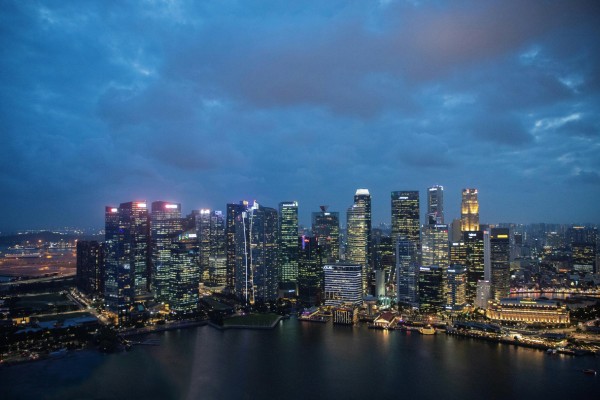
Walk into any modern office building, shopping mall, or community center in Singapore, and you'll likely see ramps, tactile pathways, and accessible restrooms. These visual markers of inclusivity are everywhere. But there's an entire category of accessibility that remains largely invisible—and absent: hearing accessibility.


While Singapore has made remarkable strides in physical accessibility since the Building Control Act of 1989, hearing accessibility continues to be a blind spot in design and compliance. Most building owners, architects, and facility managers simply don't realize their buildings fail to serve Singaporeans with hearing loss—not because they don't care, but because the problem itself is invisible.

The Invisible Barrier

Unlike a missing ramp or narrow doorway, inadequate hearing accessibility doesn't announce itself. A person with hearing loss might struggle to understand announcements at a service counter, miss critical information in a meeting room, or feel excluded in a theatre—all while appearing perfectly capable to everyone else. This invisibility allows the problem to persist unchecked, even in buildings that meet other accessibility standards.


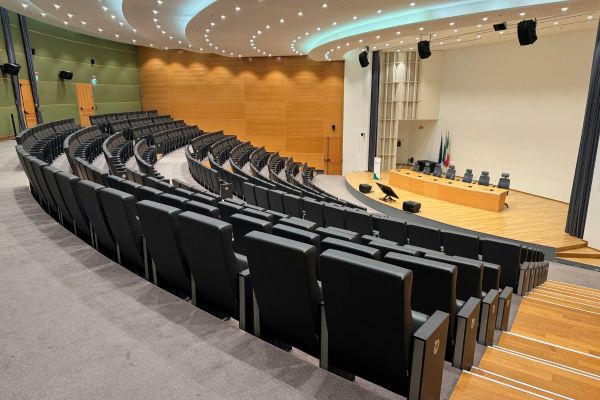
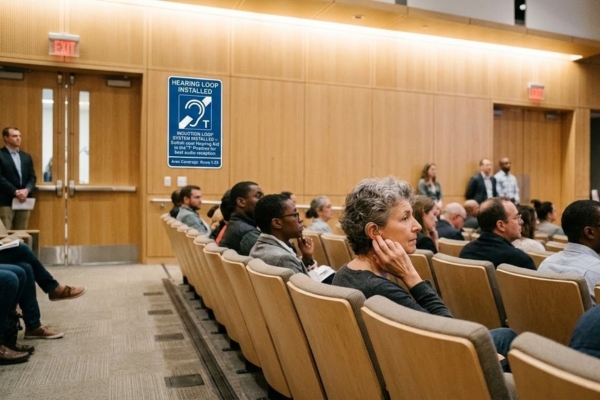
The 2013 BCA Code on Accessibility for Buildings mandates hearing enhancement systems (HES) in new constructions and buildings undergoing additions and alterations. Yet compliance remains inconsistent, and many existing buildings—especially those constructed before 1990—remain acoustically inaccessible. The 2025 Code revision introduced enhanced signage requirements for HES with telecoil functionality, but the fundamental challenge persists: if building owners don't understand the need, they won't prioritize the solution.

Why Buildings Fail Without Knowing

The failure starts at the design stage. Architects and developers often lack awareness about hearing accessibility requirements, treating them as afterthoughts rather than integral design elements. When hearing enhancement systems are installed, they frequently suffer from technical problems that go undetected because end users—people with hearing aids—rarely complain directly to building management.


Metal interference poses a hidden challenge that even well-intentioned installers may not anticipate. Steel reinforcements, aluminum ceiling grids, and other structural elements can absorb magnetic fields from induction loop systems, rendering them ineffective. In multi-story buildings, vertical signal overspill between floors can create interference and confusion, while adjacent rooms may experience crosstalk that compromises confidentiality.


Counter loops at service desks present another common failure point. Many establishments opt for portable counter loop devices that seem convenient but often struggle to meet IEC 60118-4 standards. These devices require constant adjustment, frequent recharging, and precise user positioning to function properly. Worse, they're often moved or forgotten by staff because they obstruct operations, leaving hearing aid users without the assistance they need.

The Human Cost of Oversight

When buildings fail hearing accessibility, the consequences extend beyond regulatory non-compliance. Hearing aid users experience genuine exclusion from spaces that appear welcoming to everyone else. They may avoid asking for help at counters due to the visible, potentially stigmatizing presence of portable devices. They miss important information in lecture halls, conference rooms, and public venues that lack proper audio transmission systems.


Singapore's aging population—projected to reach 24.1% seniors by 2030—makes this oversight increasingly urgent. Age-related hearing loss is common, meaning today's oversight affects tomorrow's majority.

Recognizing the Blind Spot

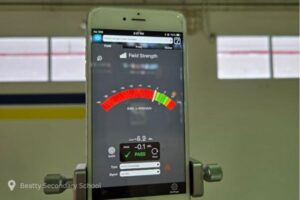
The first step toward solving invisible problems is making them visible. Building owners need to audit their facilities not just for ramps and railings, but for acoustic accessibility. They should test installed hearing enhancement systems regularly and seek feedback from actual users with hearing aids. They must recognize that meeting basic code requirements doesn't guarantee functional accessibility—technical execution matters as much as intention.


The good news is that solutions exist for every application and budget. Modern hearing enhancement technology has evolved far beyond basic portable devices, offering discrete, effective systems that integrate seamlessly into building design. The challenge isn't technological—it's awareness.


Most buildings in Singapore fail hearing accessibility not through malice, but through oversight. They're designed by people who can hear, for people who can hear, without considering the invisible barrier that excludes hundreds of thousands of residents and visitors. Until hearing accessibility moves from afterthought to standard practice, Singapore's inclusive built environment remains incomplete.


Ready to make your building truly accessible? Explore professional hearing enhancement solutions tailored to your needs:

  • Induction Loop Systems – Discreet, permanent installations for lecture halls, theaters, and meeting rooms

Contact us to assess your building's hearing accessibility and implement solutions that actually work.

Related Projects

Asian Civilisation Museum

Asian Civilisation Museum Featured Project The Asian Civilisations Museum in Singapore is an immersive journey through the diverse cultures that…


Slingshot Singapore

Nestled in the lush greenery of Mandai, Bird Paradise is a captivating avian haven. Home to over 300 species, it's…


Frasers Tower

Frasers Tower Featured Project Madame Tussauds Singapore is a world famous Wax museum and tourist attraction at the Imbiah Lookout…


Future-Proofing Accessibility: Why Assistive Listening Systems Must Evolve Beyond Hearing Loops


For years, induction hearing loops have been the gold standard of assistive listening in public venues. They are simple, discreet, and directly compatible with many hearing aids via the telecoil. Yet the way people listen is changing fast: hearing aids are becoming smarter, smartphones are effectively personal audio hubs, and guests now expect the same flexibility they enjoy with wireless headphones and streaming audio. If venues keep relying on loops alone, they risk falling behind both technology and user expectations.

The strengths—and limits—of hearing loops

Induction loops remain a powerful technology because they do one thing extremely well: deliver clear, focused sound straight to a telecoil without the user needing to handle extra equipment. For many people with traditional hearing aids or cochlear implants, walking into a loop‑equipped space and simply switching to the “T” setting is a frictionless experience. The system is invisible, dignified, and low‑touch for staff.

But loops also have constraints. They rely on telecoils, which are not universally present in all modern hearing devices, especially in newer consumer‑style hearables. They can be challenging to implement in certain building types (for example, heavily reinforced floors, stacked rooms, or complex layouts) and are not always ideal when you need multiple separate channels in the same space. As hearing technology and user behaviour evolve, a loop‑only strategy no longer covers the full spectrum of needs.

How listening habits are changing

Accessibility used to be framed almost exclusively around “hearing aids versus the room”. Today, listeners bring a whole ecosystem of devices: Bluetooth hearing aids, earbuds, cochlear implants with wireless capabilities, and smartphones that manage both sound and apps. Many guests expect to connect to audio in the same way they connect to Wi‑Fi—quickly, flexibly, and using their own hardware.

This shift means that a system which only serves telecoil users leaves out a growing segment of people who rely on Bluetooth connectivity and app‑based control. It also overlooks those with situational hearing challenges: people in a noisy environment, non‑native language listeners, or attendees who simply benefit from clearer direct audio to their personal device. Future‑proof accessibility needs to embrace this broader, more fluid definition of “who needs assistive listening”.

Why “loop only” is a risky long‑term strategy

Relying exclusively on loops creates three strategic risks for venues:

  • Technology gap: As more hearing devices ship with advanced Bluetooth audio features, guests will reasonably ask why they cannot connect to venue audio in the same way they do at home or in their car.
  • Experience gap: Younger and tech‑savvy users expect app‑based control, channel selection, and integration with other features such as captions or translations; loops alone cannot deliver that experience.
  • Upgrade gap: When building systems are designed around a single, fixed technology, every change becomes a major retrofit instead of a smooth incremental upgrade.

In other words, loops are an important base layer—but they cannot be the only layer if a venue wants to remain genuinely inclusive for the next decade.

Enter Auracast: broadcast audio for the smartphone era

Auracast, built on Bluetooth LE Audio, introduces a new paradigm: broadcast audio streams that any compatible device nearby can discover and join. Instead of needing a dedicated receiver from the venue, many guests can use their own phone, hearing aids, or earbuds to tune into the audio channel they need. That might be the main programme audio, a translation feed, or an audio‑described track.

For accessibility, this is transformative. People with hearing loss are no longer limited to telecoil‑based hearing aids to benefit from direct wireless audio. As Auracast becomes more widely adopted in consumer devices, a growing proportion of visitors will already be carrying an Auracast‑ready receiver in their pocket. That significantly lowers the friction of using assistive listening and helps normalise it as “just how audio works here”, rather than a special, stigmatized service.

From single‑mode to hybrid assistive listening

Future‑proofing accessibility is not about abandoning hearing loops; it is about moving from single‑mode to hybrid systems. A robust strategy might combine:

  • Existing or new induction loops for guaranteed support of telecoil users.
  • Auracast broadcast (such as Auri) layered on top, so guests with compatible phones and hearing devices can connect directly.
  • Optional dedicated receivers for those who either cannot or prefer not to use personal devices.

This blended approach protects current investments while opening the door to next‑generation experiences. It means that as more people adopt Auracast‑capable devices, the system naturally becomes more powerful and convenient without needing to rip out what is already in place.

Designing for tomorrow’s expectations, today

Future‑proof accessibility is about more than ticking a compliance box. It is about recognising that inclusion and convenience increasingly overlap. When the same infrastructure that helps people with hearing loss also benefits everyone who wants clearer audio, translation, or flexible listening, accessibility stops being a niche cost and becomes a mainstream value‑add for the venue.

Planning for this now—by specifying systems that can integrate Auracast, thinking about how users discover and join audio streams, and ensuring legacy compatibility for telecoil users—keeps your venue ahead of regulation, tenant demands, and guest expectations. You are not just installing an assistive listening system; you are building an audio access layer for the next decade.

If you are ready to move beyond loop‑only solutions and design an assistive listening system that is truly ready for the future, explore Auri by Auracast.

Related Projects

Esplanade in Singapore

Esplanade Theatres

Learn how Esplanade Theatres has been implementing a tried-and-tested FM System to make their environment more accessible to hearing aids…


JTC Space @ Tuas

JTC Space at Tuas in Singapore is a cutting-edge industrial and logistics hub that represents the epitome of modern business…


Khalid Mosque

Khalid Mosque

Masjid Khalid or Khalid Mosque, is a serene haven of Islamic spirituality and architectural elegance. Established in 1917, it stands…