Successful Implementation of Induction Loop System at Beatty Secondary School (L2 Multipurpose Hall)

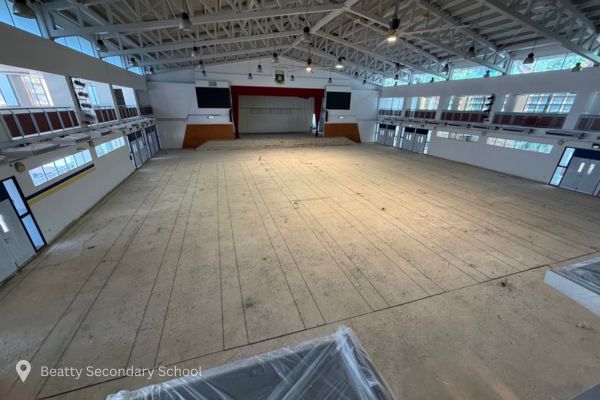
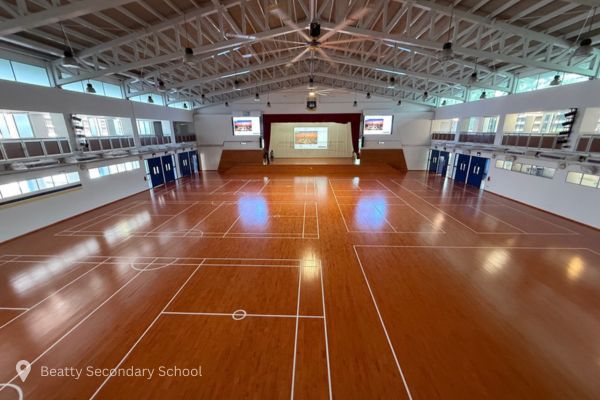
We are proud to share the successful implementation of an Induction Loop System at the Beatty Secondary School, located within the Level 2 Multipurpose Hall (MPH)—a meaningful milestone that reflects both professional achievement and personal significance.

A Project Close to the Heart

This project holds special value to us, as our founder is an alumnus of Beatty Secondary School. Being able to give back to a school that shaped his early journey makes this installation particularly meaningful.


Beatty Secondary School is also a designated mainstream school that supports students with hearing loss, reinforcing the importance of implementing reliable and high-quality Hearing Enhancement Systems (HES) to ensure inclusive learning environments.

Strong Advocacy for Accessibility

The successful adoption of the induction loop system would not have been possible without the strong support and persistence of the school’s Principal, who worked tirelessly to advocate for this system with the Ministry of Education (MOE).


Her commitment to inclusivity and equal access played a crucial role in bringing this project to fruition, ensuring that students with hearing loss are provided with the necessary support to fully participate in school activities.

Overcoming Installation Challenges

One of the key challenges during the project was the coordination with the wooden flooring contractor.


As the induction loop cable needed to be installed beneath the finished floor, it was critical to:

  • Align our loop layout with the flooring installation plan
  • Avoid clashes with fixing points and structural elements
  • Ensure that the integrity of both the loop system and flooring installation was maintained

Through close collaboration and careful planning, we successfully integrated the loop system without disrupting the flooring works.

Extensive Coverage for Maximum Accessibility

The induction loop installed covers approximately three-quarters of the entire Multipurpose Hall.


This wide coverage ensures that:

  • Students with hearing loss are not restricted to specific seating areas
  • They can sit freely within the hall
  • They continue to receive clear and intelligible audio directly through their hearing aids or cochlear implants

This design approach aligns with best practices and standards, delivering a seamless and inclusive listening experiencefor all users.

Compliance, Commissioning & Verification

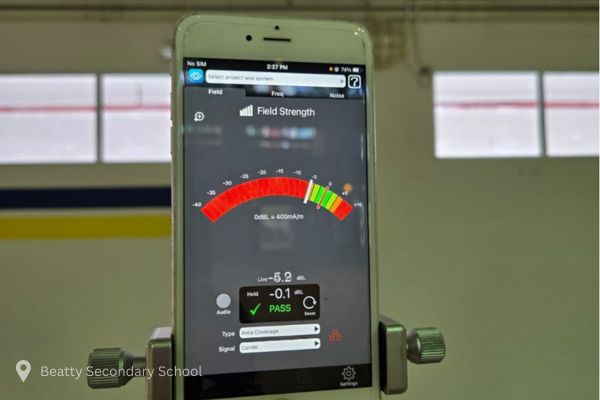
The system was fully commissioned in accordance with IEC 60118-4, ensuring that the magnetic field strength, uniformity, and audio quality meet international performance requirements for induction loop systems.


Upon completion, the system performance was tested, verified, and demonstrated on-site in the presence of the school’s:

  • Principal
  • Vice Principal
  • Operational Manager

•
•
•
All stakeholders were able to experience the system firsthand and confirmed that the installation meets the required standards and delivers a clear and reliable listening experience.

Enhancing Inclusive Education

With the successful implementation of the induction loop system, Beatty Secondary School’s Multipurpose Hall is now equipped to support:

  • Assemblies
  • Performances
  • School events

—all while ensuring that students with hearing loss can fully engage and participate alongside their peers.

A Meaningful Milestone

This project is more than just a technical installation—it represents a shared commitment between the school, its leadership, and our team to foster inclusivity, accessibility, and equal opportunity in education.


We are honoured to have contributed to this initiative and look forward to supporting more institutions in creating environments where no student is left behind.

Related Projects

Madame Tussauds Singapore

Madame Tussauds Singapore Featured Project Photo: theopentraveler   Madame Tussauds Singapore is a world famous Wax museum and tourist attraction…


AngulliaMosque

AngulliaMosque Featured Project Madame Tussauds Singapore is a world famous Wax museum and tourist attraction at the Imbiah Lookout of…


Al-Amin Mosque

Learn how Al-Amin Mosque made their prayer hall more accessible to worshippers wearing hearing aids and cochlear implants.


Is Your Venue Ready for Auracast? Practical Checklist for 2026


...

Auracast is moving quickly from “emerging tech” to “expected amenity” in modern public venues, especially those committed to accessibility and guest experience. Before you invest, it helps to know whether your environment, infrastructure, and audience are ready to benefit from an Auracast-powered system like Auri.
 
Use this practical 2026 checklist to decide if now is the right time to bring Auracast into your venue.

1. Do you serve guests who struggle to hear?

Start by looking at your audience and use cases. You are likely ready for Auracast if:

  • You host events where speech clarity is critical (worship, training, conferences, education, tours).
  • You receive feedback that the sound is “too soft,” “echoey,” or “unclear,” even when your PA system is working properly.
  • You serve seniors, people with hearing loss, or multilingual audiences who benefit from direct, personalized audio.

If any of these describe your venue, a direct-to-device system like Auracast can transform listening comfort and comprehension for many guests at once.

2. Does your audio system have a clean, accessible feed?

Auracast does not replace your sound system; it rides on top of it. To be ready, your venue should ideally have:

  • A reasonably well‑tuned PA or AV system with a clear microphone signal.
  • An accessible audio output (line or mic level) from your mixer, processor, or source equipment.
  • A stable network or rack space where an Auracast transmitter such as Auri TX2N can be installed.

If you can already feed audio to recording, streaming, or overflow rooms, you are probably technically ready to feed Auracast as well.

3. Do your guests use smartphones, earbuds, or hearing aids?

Auracast works best in venues where people already bring their own listening devices. Your venue is a good fit if:

  • Many newer smartphones, earbuds, and hearing aids are beginning to support Auracast.
  • You have, or expect to have, hearing aid users with Bluetooth or telecoil features.
  • You want to support both hearing-impaired and non-hearing-impaired listeners with the same system.

Systems like Auri support Auracast-enabled devices directly, and also provide pocket receivers (Auri RX1) with earbuds or neckloops for guests who don’t have compatible devices.

4. Is your space “transient” or multi-use?

Auracast shines in environments where people come and go or where you can’t easily install permanent cabling. This includes:

  • Transport hubs, lobbies, retail, and waiting areas.
  • Multi-purpose halls, ballrooms, and breakout rooms that change layouts frequently.
  • Glass-heavy or open-plan spaces where traditional infrared systems struggle.

If you’ve hesitated to install loops or IR because of cabling, aesthetics, or structural limitations, Auracast transmitters offer a more flexible, lower-impact path.

5. Do you want to reduce receiver logistics?

Traditional assistive listening often means managing a pool of dedicated receivers. You may be ready for Auracast if you want to:

  • Minimize cleaning, charging, and tracking of shared devices.
  • Avoid the need for extra staff just to issue and collect receivers.
  • Offer discreet accessibility without guests having to ask at a counter.

With Auri, users connect with their own devices where possible, and you can maintain a smaller, easier-to-manage set of RX1 receivers for those who need them.

6. Are you planning upgrades or aiming for “future-ready”?

Auracast is especially attractive if you are:

  • Renovating, expanding, or rethinking AV infrastructure.
  • Working toward accessibility or smart-building goals for the next 5–10 years.
  • Looking for a system that can coexist with and gradually complement existing loop, FM, or IR solutions.

Auri is designed to retrofit existing systems or integrate alongside them, so you don’t have to rip and replace what you already have.

7. Can you support basic signage and onboarding?

Even the best assistive listening system only works if people know it exists. Your venue is ready if you can:

  • Place clear signage indicating Auracast availability and how to connect.
  • Update websites or event instructions with a short “How to listen” section.
  • Brief frontline staff so they can answer simple guest questions.

These small operational adjustments help Auracast deliver maximum impact with minimal disruption.
 
If you answered “yes” to most of these points, your venue is likely ready to benefit from Auracast today. A solution like Auri can help you deliver high-quality, low-latency audio to unlimited users, with support for both modern Bluetooth devices and traditional telecoil hearing aids.
 
Want to see what Auracast could look like in your space?
 
Discover how Auri—powered by Auracast Bluetooth LE Audio—can turn your venue into a truly inclusive listening environment. Learn more and explore deployment options at: https://loop-system.com/auri/
 
What kind of venue are you planning to check against this Auracast-ready checklist?

Related Projects

The Embassy of Ireland

InfraRed Systems & TalkPerfect Intercom Integration in The Embassy of Ireland   Since the year 2000, Ireland has opened a…


JTC Space @ Tuas

JTC Space at Tuas in Singapore is a cutting-edge industrial and logistics hub that represents the epitome of modern business…


IKEA Alexandra

IKEA Alexandra Featured Project Nestled in the vibrant heart of Alexandra in Singapore lies an iconic Swedish haven that transcends…


What is Auracast and Why it is Redefining Hearing Accessibility in Public Spaces


...

 
In a fast-paced, high-density city like Singapore, hearing clearly in public spaces is often a challenge—especially for people with hearing loss. Traditional hearing loops and FM systems have helped, but a new technology called Auracast is transforming what inclusive listening can look like in everyday venues.

What is Auracast?

Auracast is a feature of Bluetooth LE Audio that allows audio to be broadcast from one source—like a microphone, TV, or PA system—to an unlimited number of compatible devices at the same time. Instead of pairing individually, listeners simply “tune in” to a broadcast stream using their smartphone, hearing aids, earbuds, or dedicated receivers. This makes assistive listening work more like Wi‑Fi for sound: one shared infrastructure, accessible by many people in parallel.
 
In public venues, Auracast can carry speech, commentary, translations, or program audio directly to each listener’s ears. That direct, wireless connection cuts through background noise and distance, improving clarity dramatically compared with relying on loudspeakers alone.

Why Auracast is a game changer for accessibility

Singapore’s public buildings already face strong expectations around accessibility, including the provision of hearing enhancement systems. Auracast pushes this further by making accessibility more universal, flexible, and discreet for both hearing‑impaired and non‑hearing‑impaired users.
 
Key advantages include:

  • Direct‑to‑device access: Many users can connect with their own phones, hearing aids, or earbuds, avoiding the need to queue for shared receivers.
  • Unlimited listeners: One Auracast transmitter can serve large crowds without running out of devices or channels.
  • Discreet, stigma‑free use: People can listen with their usual earbuds or hearing aids, so assistive listening doesn’t “look” different from regular audio streaming.
  • Backward compatibility: Those with telecoil hearing aids can still benefit using an Auracast receiver with a neckloop, ensuring existing users are not left behind.

For venues, Auracast also reduces the overhead of maintaining, cleaning, and issuing large numbers of shared receivers. Because it uses standard Bluetooth LE Audio, it can often be integrated with existing AV systems without major structural changes.

How Auracast fits Singapore’s public spaces

Singapore’s hotels, community clubs, schools, museums, airports, and places of worship serve diverse, multilingual audiences in often noisy environments. Auracast allows these venues to broadcast clearly intelligible audio streams—announcements, lectures, sermons, or tour commentary—to anyone who opts in.
Typical applications include:

  • Event spaces and theatres: Clear speech for talks and performances, with multi‑language channels running simultaneously.
  • Museums and attractions: Audio guides and accessibility narration without dedicated guide devices, using visitors’ own phones and earbuds.
  • Transport and retail: Better announcement clarity in transient spaces like terminals, platforms, and malls, where fixed loops are harder to implement.

Because Auracast is scalable, venues can start with a single room and expand coverage across multiple zones or buildings by adding more transmitters. Central management software lets operators configure channels, security, and firmware remotely, making it easier to run at scale.

Auri: bringing Auracast into real venues

To turn the promise of Auracast into a practical solution, systems like Auri and their technology partners combine professional‑grade hardware with Auracast broadcast capability. An Auri transmitter connects to the venue’s audio source, broadcasts via Auracast BLE, and allows guests to listen using compatible devices or compact receivers with neckloops for telecoil hearing aids.
 
Auri is designed specifically for public venues, offering:

  • High‑quality, low‑latency audio over Bluetooth LE.
  • Unlimited receivers and multi‑channel broadcasting for different languages or events.
  • Easy retrofitting alongside existing loop, IR, or FM systems for a gradual transition.

In Singapore’s drive toward smarter, more inclusive public spaces, Auracast‑powered systems like Auri are redefining what “accessible audio” means—moving from specialised, visible equipment to seamless, user‑friendly listening for everyone.
 
Ready to make your venue truly inclusive?
 
Discover how Auri, powered by Auracast Bluetooth LE Audio, can transform hearing accessibility in your public space. Learn more and get started at https://loop-system.com/auri/

Related Projects

Khalid Mosque

St. Joseph’s Church

Masjid Khalid or Khalid Mosque, is a serene haven of Islamic spirituality and architectural elegance. Established in 1917, it stands…


Frasers Tower

Frasers Tower Featured Project Madame Tussauds Singapore is a world famous Wax museum and tourist attraction at the Imbiah Lookout…


Angullia Mosque

Angullia Mosque, located in Little India is one of the oldest mosque in Singapore. It was built in 1890 by…


Woodlands Memorial

Learn how The Listening Lab helped Woodlands Memorial Columbarium elevate their space and ensure that everyone can hear and be…