Common Mistakes Venues Make When Choosing Assistive Listening Systems


For many venues in Singapore, assistive listening is treated as a checkbox for compliance rather than as a core part of guest experience. That mindset leads to systems that technically exist on paper but are barely used, poorly maintained, and invisible to the people who need them most.

Mistake 1: Treating HES as just “AV equipment”

A hearing enhancement system is not just another microphone or loudspeaker; it is an accessibility tool governed by BCA’s Code on Accessibility and disability‑inclusion best practices. When venues leave the decision entirely to a general AV vendor without specialist input, they often end up with systems that do not meet coverage, intelligibility, or privacy needs.

The result is a loop, FM, IR, or Auracast setup that looks good in a schematic but fails real users in a noisy hall, echoey sanctuary, or glass‑heavy meeting room. In Singapore, engaging a provider that focuses specifically on assistive listening—rather than “audio in general”—is critical to getting the design right.

Mistake 2: Ignoring venue layout and construction

Building owners often assume “one size fits all”, selecting a technology based on price or catalog descriptions instead of room shape, construction materials, and usage patterns. For example, a simple perimeter hearing loop may not perform well in odd‑shaped rooms, spaces with heavy steel reinforcement, or stacked floors where crosstalk can occur.

Likewise, infrared systems demand clear line‑of‑sight and suitable lighting conditions, while Digital FM thrives in flexible, temporary setups such as training rooms or tours. A short design consultation can surface these constraints early and avoid expensive rework or disappointing performance on opening day.

Mistake 3: Choosing purely on cost, not lifecycle

It is common to choose the lowest‑cost proposal without factoring in staffing, consumables, and the total cost of ownership over ten years. Digital FM and IR systems, for example, require receivers and neckloops to be issued, collected, cleaned, and charged after every event, which quietly adds labour and operational overhead.

By contrast, a well‑designed induction loop lets most hearing aid and cochlear implant users connect directly via their telecoil with no extra hardware to manage, reducing friction for guests and staff. Newer Auracast‑based systems like Auri can also reduce hardware dependency over time by letting compatible phones and hearing devices connect straight to the broadcast.

Mistake 4: Overlooking user experience and signage

Another frequent mistake is installing a compliant system and then hiding it—no signage, no staff awareness, no clear instructions. Without the familiar “blue ear” sign and simple guidance (“Switch your hearing aid to T‑coil” or “Scan this Auracast channel”), many guests never realise help is available.

Venues also forget to test the experience from the listener’s perspective: is the speech clear, is background music overwhelming, does the coverage match the advertised seats? Regular checks and basic staff training turn a silent, underused asset into a visible, valued service that guests learn to trust.

Mistake 5: Failing to future‑proof the investment

Singapore’s accessibility landscape is evolving quickly, with stronger expectations around inclusive audio in public, educational, and commercial spaces. Some venues still lock themselves into legacy‑only systems without considering how they will serve both today’s hearing aid users and tomorrow’s Auracast‑enabled phones and hearables.

A more resilient strategy is to design for coexistence: loops for guaranteed compatibility with telecoil users, Digital FM or IR where portability or confidentiality is key, and Auracast (Auri) layered in for scalable, smartphone‑friendly listening. This blended approach makes upgrades incremental rather than disruptive and shows regulators, tenants, and guests that the venue is committed to long‑term inclusion.

Mistake 6: Skipping specialist commissioning and support

Finally, many projects stop after installation, with no proper commissioning, measurement, or documentation according to international standards for assistive listening. Without calibrated levels, coverage verification, and as‑built records, it becomes hard to troubleshoot complaints or prove compliance later.

Partnering with a specialist who can design, install, test, and maintain the system—rather than a one‑off installer—helps ensure the HES continues performing as the venue changes over time. That includes support for expansions, refurbishments, and integration with new AV or broadcast platforms like Auracast.

If you want to avoid these common mistakes and design an assistive listening system that truly works for your guests in Singapore, explore our solutions: induction loop systems, Digital FM, Infra-red, and Auri by Auracast.

Related Projects

Pan Pacific Orchard Hotel

Pan Pacific Orchard Hotel Pan Pacific Orchard by Darren Soh from Arch Daily   Recently crowned as the “World’s Best…


Esplanade in Singapore

Esplanade Theatres

Learn how Esplanade Theatres has been implementing a tried-and-tested FM System to make their environment more accessible to hearing aids…


AngulliaMosque

AngulliaMosque Featured Project Madame Tussauds Singapore is a world famous Wax museum and tourist attraction at the Imbiah Lookout of…


Angullia Mosque

Angullia Mosque, located in Little India is one of the oldest mosque in Singapore. It was built in 1890 by…


Case Study: Temasek Shophouse – First Auracast™ Implementation in Singapore

🏛️ Background of Temasek Shophouse

Temasek Shophouse is a restored heritage building repurposed into a community and social impact hub by the Temasek Foundation.


Like many conserved shophouses in Singapore, the building reflects the country’s architectural heritage while being thoughtfully adapted for modern use. Today, it serves as a vibrant multi-purpose venue that hosts:

  • Community programmes
  • Social initiatives
  • Talks, workshops, and exhibitions

The space is designed to be inclusive and accessible, welcoming a diverse audience including seniors and individuals with hearing loss.

🎯 Project Overview

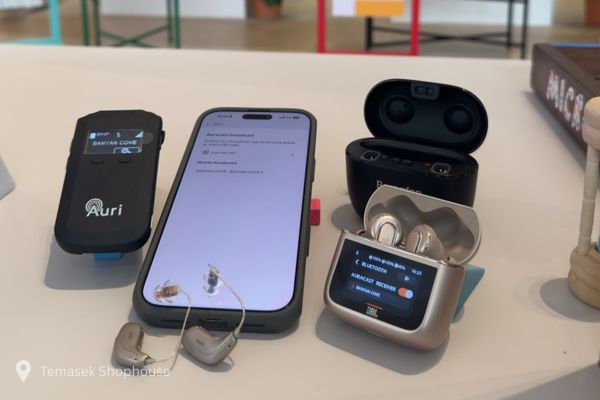
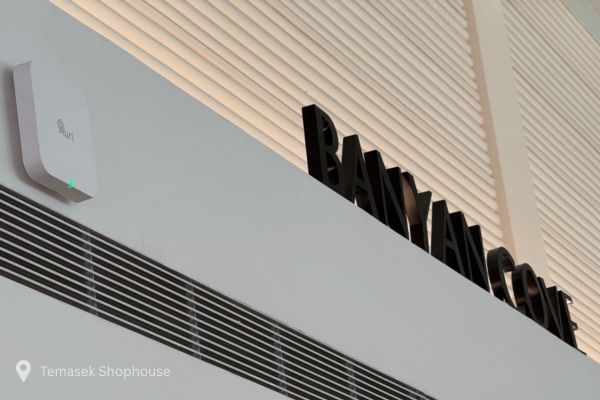
We are proud to have successfully implemented Auri (Auracast™-based Assistive Listening System) across three key areas within the building:

  • Level 1 – Banyan Cove
  • Level 1 – Living Room
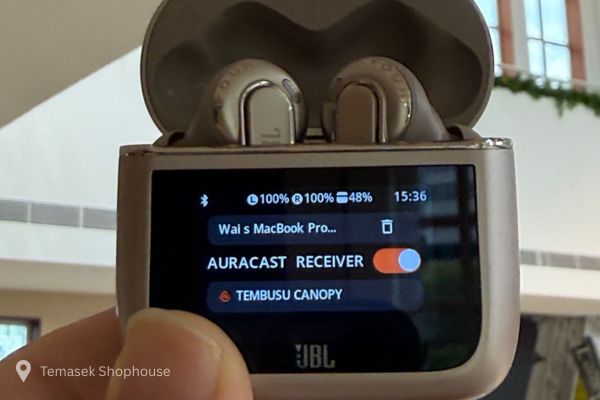
  • Level 3 – Tembusu Canopy

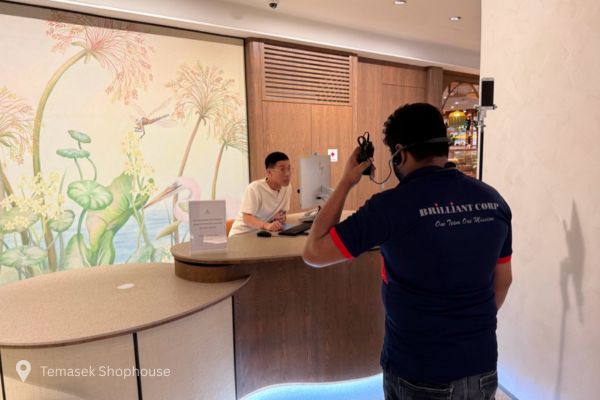
In addition, the service counters within the building are equipped with our induction counter loop systems, ensuring accessibility at key interaction points.


This project marks a significant milestone as it is the first Auracast™ deployment in Singapore for such a community-centric venue.

🔊 What is Auri (Auracast™ Technology)?

Auri is an advanced wireless assistive listening solution powered by Auracast, which operates on BluetoothÂŽ Low Energy (LE Audio).


Unlike traditional systems, Auri enables one-to-many audio broadcasting, allowing users to connect directly to the audio source without the need for complex pairing.


Key Capabilities:

  • Broadcast audio directly to:
  • Auracast-enabled hearing aids
  • Wireless earbuds
  • Headphones
  • Provides clear, low-latency audio transmission
  • Supports multiple users simultaneously

🌍 Inclusive for All Users

One of the biggest advantages of Auri is that it goes beyond traditional assistive listening systems:

  • For hearing aid users: Direct streaming to Auracast-enabled devices
  • For general users: Anyone with compatible earbuds or headphones can tune in and listen clearly—especially useful in noisy environments

This makes the system universally inclusive, benefiting both:

  • Individuals with hearing loss
  • Normal hearing users seeking enhanced audio clarity

🔁 Backward Compatibility (Telecoil Support)

Auri is also designed with inclusivity in mind for existing users of telecoil-enabled hearing aids.

  • Users can connect via an Auri Receiver paired with a neckloop
  • The neckloop transmits audio directly to telecoil-enabled hearing aids

This ensures that:

  • Legacy hearing aid users are not left behind
  • The system remains future-ready while supporting existing technology

🧪 Survey, Design & Commissioning Tools

An important aspect of this project was the use of the Auri Receiver as a survey and commissioning tool.


The receiver is capable of:

  • Scanning the venue to determine whether transmitter placement provides adequate coverage
  • Acting as a TX Survey Tool, detecting and reporting data from all Auri transmitters within the space
  • Verifying signal strength, coverage consistency, and broadcast performance

During the project:

  • We conducted a comprehensive site survey using the Auri Receiver
  • This allowed us to optimise transmitter locations across Banyan Cove, Living Room, and Tembusu Canopy
  • Ensured that each area achieved reliable and consistent coverage before final installation

Post-installation, the same tool was used as part of the commissioning process to validate system performance and ensure the installation met operational expectations.

🏢 Complementary Counter Loop Systems

To further enhance accessibility, the counters within Temasek Shophouse are equipped with induction loop systems.


These provide:

  • Clear one-to-one communication
  • Improved speech intelligibility at service points

This combination of Auracast (area coverage) and counter loops (point-of-service support) creates a holistic accessibility solution across the building.

🚀 A First in Singapore

This installation represents the first implementation of Auracast™ technology in Singapore within a real-world, multi-space community venue.


It demonstrates:

  • The practical deployment of next-generation assistive listening technology
  • The readiness of venues to adopt future-proof solutions
  • A strong commitment to inclusive design and accessibility

🔮 Looking Ahead

As awareness and adoption of Auracast-enabled devices continue to grow, more venues are expected to follow suit.


This project sets the foundation for:

  • Wider adoption across public spaces, auditoriums, and community venues
  • Seamless integration with personal devices
  • A new standard for accessible audio experiences

The successful implementation at Temasek Shophouse highlights how technology and thoughtful design can come together to create inclusive, future-ready environments.


From heritage building to modern accessibility hub, this project demonstrates that:

  • Accessibility is not just a requirement—it is an opportunity to enhance experiences for everyone.
  • We look forward to bringing more of such innovations to future projects across Singapore and beyond.

Let's make your environment inclusive and future-ready with Auri (Auracast™ Technology). Enquire today!

Related Projects

Angullia Mosque

Angullia Mosque, located in Little India is one of the oldest mosque in Singapore. It was built in 1890 by…


Changi Airport T4

Changi Airport T4 Featured Project Madame Tussauds Singapore is a world famous Wax museum and tourist attraction at the Imbiah…


Al-Amin Mosque

Learn how Al-Amin Mosque made their prayer hall more accessible to worshippers wearing hearing aids and cochlear implants.