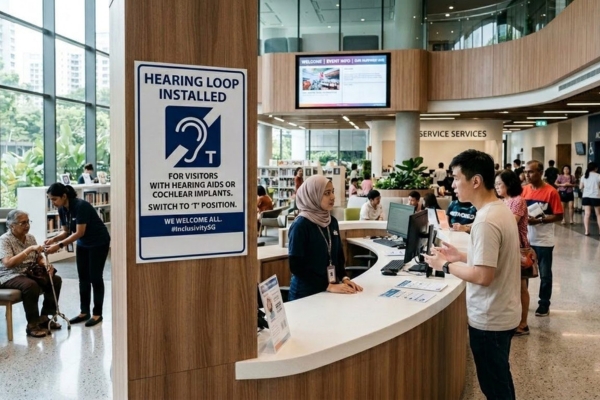
“Inclusive infrastructure” has become a buzzword in architecture and urban planning, but in Singapore it is far more than a trend or a box‑ticking exercise. It is about creating buildings and public spaces that everyone can use with comfort, safety, and dignity—regardless of age, mobility, sensory ability, or background. In a dense, fast‑evolving city, inclusive infrastructure is increasingly a core measure of whether a building is truly future‑ready.
Designing for Real People, Not “Average” Users
At its heart, inclusive design starts from one simple idea: people are diverse, and our buildings should reflect that. Instead of designing for a narrow “average” user, inclusive infrastructure anticipates a wide range of real‑world needs—older adults, children, wheelchair users, people with temporary injuries, neurodivergent users, and those with hearing or vision loss. When design teams plan circulation routes, entrances, signage, acoustics, and technology with this spectrum in mind, buildings become easier and more intuitive for everyone, not just for a minority.
The Singapore Context: Beyond Basic Compliance
In Singapore, this philosophy aligns naturally with the national push toward a barrier‑free and age‑friendly built environment. Accessibility codes and universal design guidelines have raised the baseline: ramps instead of steps as the default, lifts reaching every key level, generous corridors, and accessible toilets that consider caregivers as well as users. But “inclusive infrastructure” goes further than basic compliance. It asks how a space actually feels and functions in daily life. Are wayfinding cues clear enough for someone with low vision? Are queues and counters manageable for someone using a walker or pushing a stroller? Is the sound environment friendly to people who rely on hearing devices?
Why Sensory Accessibility Matters
This is where sensory accessibility becomes just as important as physical access. Many modern interiors are visually impressive but acoustically harsh, filled with reverberation and background noise. For people with hearing loss, this can make announcements, group discussions, and even casual conversations exhausting or impossible to follow. Inclusive infrastructure recognises that access to information is as critical as access to doorways and lifts. A beautifully ramped auditorium is still exclusionary if half the audience cannot clearly hear the performance or speech.
Assistive Listening as Core Infrastructure
To bridge this gap, forward‑thinking projects increasingly integrate assistive listening technologies into their core design, rather than treating them as afterthoughts. Induction loop systems, Digital FM, infra‑red systems, induction loops and newer Bluetooth‑based solutions can offer discreet audio pathways that deliver clear, intelligible sound directly to hearing aids, cochlear implants, headsets, or personal devices. In practice, this can be the difference between a person merely occupying a seat in a room and actually participating in what is happening there—whether it is a lecture, a council meeting, a worship service, or a live performance.
Inclusive Design Benefits Everyone
Importantly, inclusive infrastructure is not only about permanent disabilities. A young professional who forgot their glasses, a tourist struggling with announcements in a noisy station, or a parent holding a sleeping child in a crowded hall all benefit from clearer sound, better sightlines, and more legible spaces. Good inclusive design also serves people with temporary conditions, language barriers, or sensory overload. The result is a built environment that is more forgiving, more humane, and ultimately more resilient as society ages and expectations rise.
A Strategic Advantage for Building Owners
For building owners and operators in Singapore, investing in inclusive infrastructure also brings practical benefits. Spaces that are easier to navigate and understand reduce frustration, complaints, and safety risks. Venues that communicate a strong commitment to inclusion—through visible signage, staff training, and integrated assistive technologies—send a positive signal to tenants, patrons, and regulators alike. In competitive markets such as retail, hospitality, healthcare, and education, this can be a real differentiator, transforming accessibility from a cost centre into a strategic advantage.
Inclusion as a Statement of Respect
Most importantly, inclusive infrastructure is about respect. When people with hearing loss can follow every word of a presentation, when seniors can move confidently from MRT to mall to medical appointment, and when families of all shapes and sizes feel welcome in shared spaces, the city becomes more cohesive. Buildings stop being just containers for activity and start functioning as true public assets—places where participation is possible for everyone, not just for those who fit a narrow physical or sensory profile.
Take the Next Step Toward Inclusive Infrastructure
If you are designing, upgrading, or operating a space in Singapore and want to make it genuinely inclusive—especially for people with hearing loss—specialised hearing enhancement technologies are an essential part of the solution. Explore how you can integrate
to move beyond basic compliance and build truly inclusive infrastructure for today—and tomorrow.